Fritz Brun
18 August 1878 – 29 November 1959
Search for Fritz Brun music on Amazon
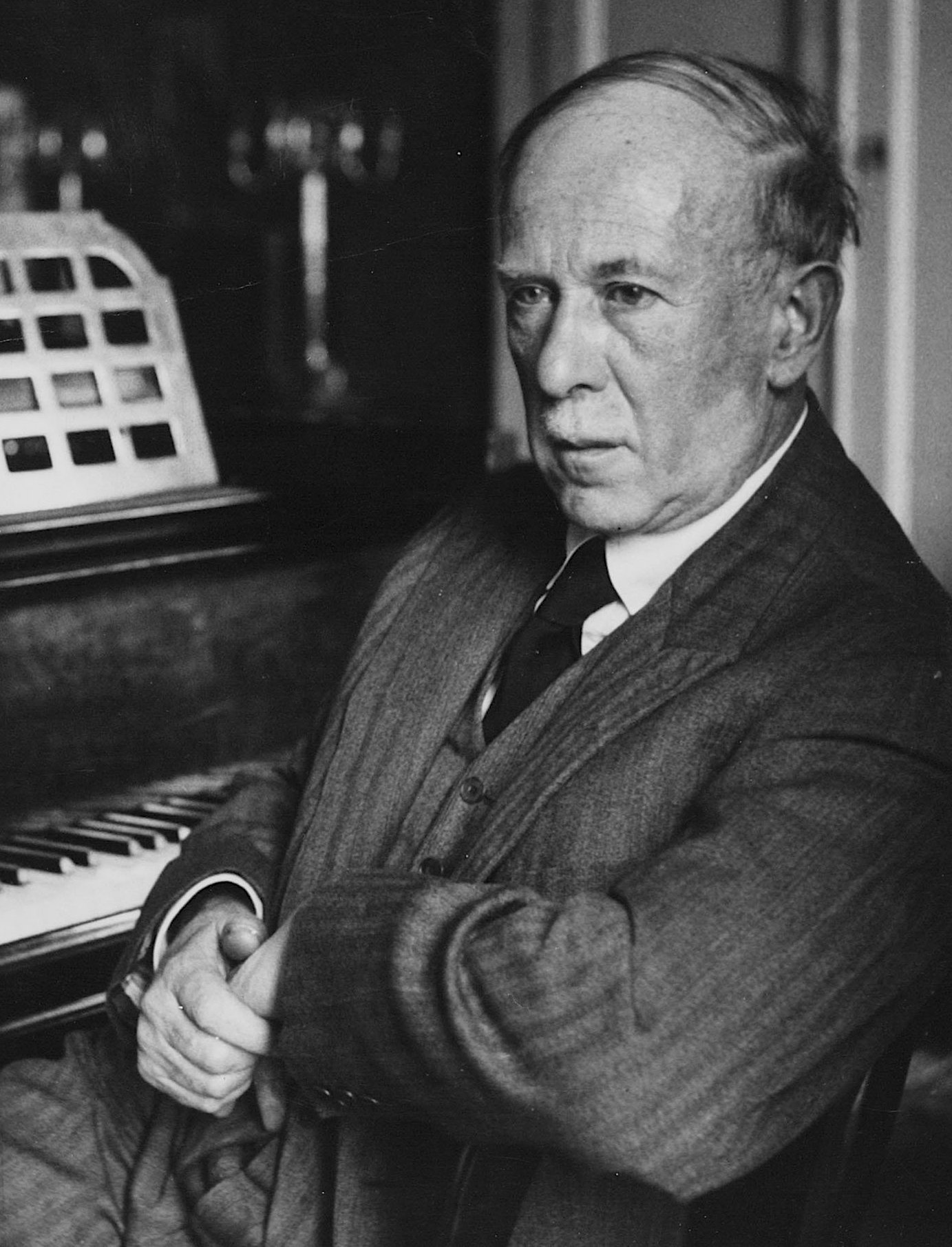
|
Fritz Brun, born on August 18, 1878, in Lucerne, Switzerland, grew up in modest circumstances. His father, a secondary school teacher, died when Brun was only eight, leaving a lasting mark on his youth. Early piano instruction allowed him not only to develop musically but also to earn money by playing the harmonium for services at the Lucerne penitentiary church. He studied music theory with Joseph Breitenbach and piano with Peter Fassbänder, later benefiting from lessons with Willem Mengelberg, then a young conductor at the Lucerne Conservatory. In 1897, thanks to support from Friedrich Hegar and Hans Huber, he obtained a scholarship to study at the Cologne Conservatory, where he learned composition and conducting from Franz Wüllner and refined his piano technique under Max van de Sandt. His String Quartet No. 1 appeared in 1898, and in 1901 his Symphony No. 1, written as his graduation piece, was premiered in Arnhem the following year, winning the Paderewski Prize. Declining a teaching offer in Zurich, Brun moved to Berlin in 1901 to serve as private musician to Prince George of Prussia, uncle of Kaiser Wilhelm II. The Prince became both patron and friend, opening his extensive library to Brun. Following the Prince’s death, Brun spent time in London, sustaining himself through piano teaching, accompaniment, and arranging music-hall songs. A later appointment at the Dortmund Conservatory ended with the school’s bankruptcy, and in 1903 Brun returned permanently to Switzerland, settling in Bern. There he taught piano at the local conservatory until 1909, when he became chief conductor of the Bern Music Society and its orchestra, also directing two major choirs. These Bernese years were productive ones: his Symphonies Nos. 2–7 were composed and performed successfully during this period. In 1912, he married Hanna Rosenmund, and the couple had three children. After three decades in Bern, Brun retired in 1941, shortly after conducting a celebrated performance of Beethoven’s Missa Solemnis in the city’s cathedral. Though stepping down formally, he continued to appear as a guest conductor and chamber musician. He devoted his later years at his home, Casa Indipendenza in Morcote by Lake Lugano, to composing his last three symphonies, Nos. 8–10. Brun died on November 29, 1959; his ashes were laid to rest in Grindelwald, beneath the towering peaks of the Eiger, Mönch, and Jungfrau—mountains he deeply loved. Brun was widely respected among artists, counted friends such as Othmar Schoeck, Hermann Suter, Friedrich Hegar, Hans Huber, conductor Volkmar Andreae, and writer Hermann Hesse among his circle, and received many honors throughout his life. His temperament was serious, sometimes brusque, but often gave way to warmth and humor—traits mirrored in his music. His ten symphonies, large-scale, deeply expressive works, are often compared to those of Wilhelm Furtwängler for their personal, searching quality. Because of his evocation of nature and elemental forces, critics have sometimes referred to him as a “Swiss Sibelius.” Brun’s catalogue extends well beyond his ten symphonies, composed between 1901 and 1953. It includes the symphonic poem Aus dem Buch Hiob (1906), the Symphonischer Prolog (1942), the Ouvertüre zu einer Jubiläumsfeier (1950), and Rhapsodie (1957). For soloists and orchestra he wrote a Piano Concerto in A major (1946), a Cello Concerto in D minor (1947), and various orchestral variations and divertimenti. His chamber music comprises four string quartets, a piano quintet, violin and cello sonatas, and numerous songs for voice and piano or choir, many set to poems by Goethe, Eichendorff, Mörike, and others. In his lifetime, these choral works were among his most frequently performed compositions and remain present in Swiss choral repertory today. As a conductor, Brun was not known for flamboyance but for seriousness and integrity. In Bern he led the city orchestra for over three decades, presenting works not only from the German tradition—Bach, Beethoven, Brahms, Wagner, and Bruckner—but also from French composers like Debussy and Ravel, as well as moderns such as Mahler, Strauss, Honegger, and Reger. He championed Swiss contemporaries including Schoeck, Suter, Honegger, Burkhard, and Martin, enriching the nation’s musical life. Abroad, he appeared in Paris, Rome, Vienna, and Leipzig, conducting both his own works and those of his colleagues. Though demanding and sometimes feared by orchestras for his high standards, he earned admiration for his conviction and artistry. Despite his substantial achievements, Brun’s reputation diminished after his death. Few of his works were published, and for decades his music was scarcely recorded. Only in the late twentieth century did recordings of his symphonies and chamber works begin to reappear, leading to a slow rediscovery of his contributions. His style, described by musicologist Willi Schuh as knotty and austere on first hearing yet profoundly original and authentically Swiss, rewards repeated listening. Sculptor Hermann Hubacher once likened Brun’s music to standing in an alpine meadow surrounded by rocks, while composer Peter Mieg saw in his symphonies a uniquely Swiss insistence on form and depth. Today, Fritz Brun’s legacy endures as that of a rigorous, uncompromising artist who forged a powerful symphonic voice in Swiss music.
|
Essential Works:
|
Symphonies:
Symphony No. 1 in B minor (1901)
Symphony No. 2 in B-flat major (1911)
Symphony No. 3 in D minor (1919)
Symphony No. 4 in E (commonly E minor or E major, 1925)
Symphony No. 5 in E-flat major (1929)
Symphony No. 6 in C major (1932–1933)
Symphony No. 7 in D (1937)
Symphony No. 8 in A (composed 1938–1942, premiered 11 Nov 1942)
Symphony No. 9 in F major (“symphony-suite,” 1949–50)
Symphony No. 10 in B-flat major (1953)
|